
Self-Service Automation
Automatically Process Meter Readings, Payment Instalments and More
Give your energy customers a self-service solution that handles standard requests such as meter readings or instalment adjustments immediately. AI identifies, checks and processes each request automatically.
Industry
Energy & Utilities
Business Unit
Customer Service, Billing
Data Sources
CRM, Billing System, Customer Portal
01 · Initial Situation
Standard Requests Consume Service Capacity Despite Being Rule-Based
Meter readings, payment instalment changes and billing requests account for a large proportion of service contacts for energy providers. While the processes are clearly defined, they are still handled by phone and email, then recorded, assigned and transferred to the billing system manually. This creates delays, transmission errors and contacts that prevent the service team from focusing on cases that genuinely require clarification. For customers, it means waiting for a process they could easily complete themselves.
02 · How the AI Works
From Reported Value to Completed Process
The four steps take a standard request from secure assignment and validation through to automatic posting – without any manual intervention.

01 · Identification
After logging in, the system securely assigns each request to the correct customer, contract and delivery point. This ensures every case is clearly referenced and authorisation-checked from the outset.
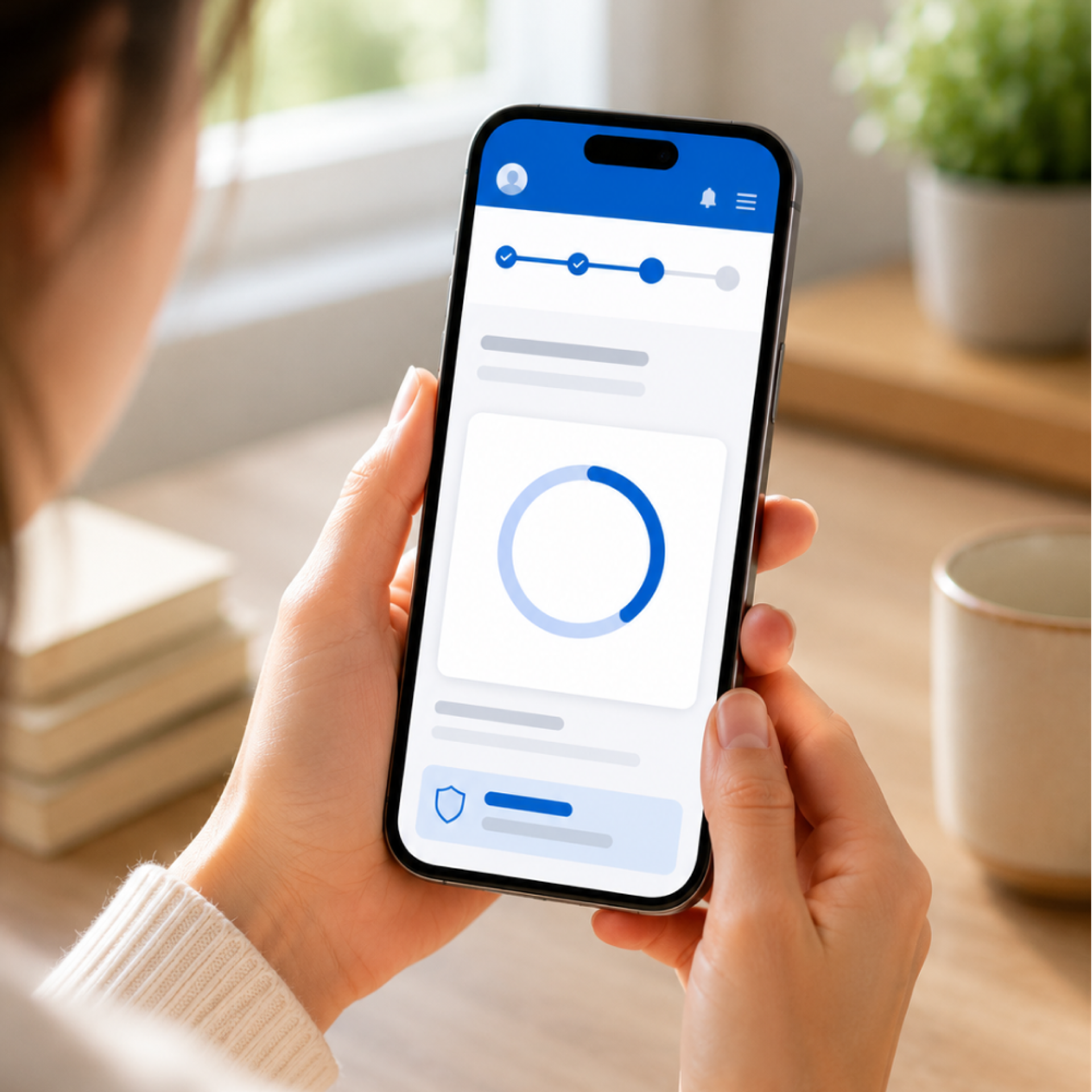
02 · Plausibility Check
The reported value is checked against consumption history, expected ranges, the meter reading date and special rules. The system identifies duplicates and outliers before they reach billing.
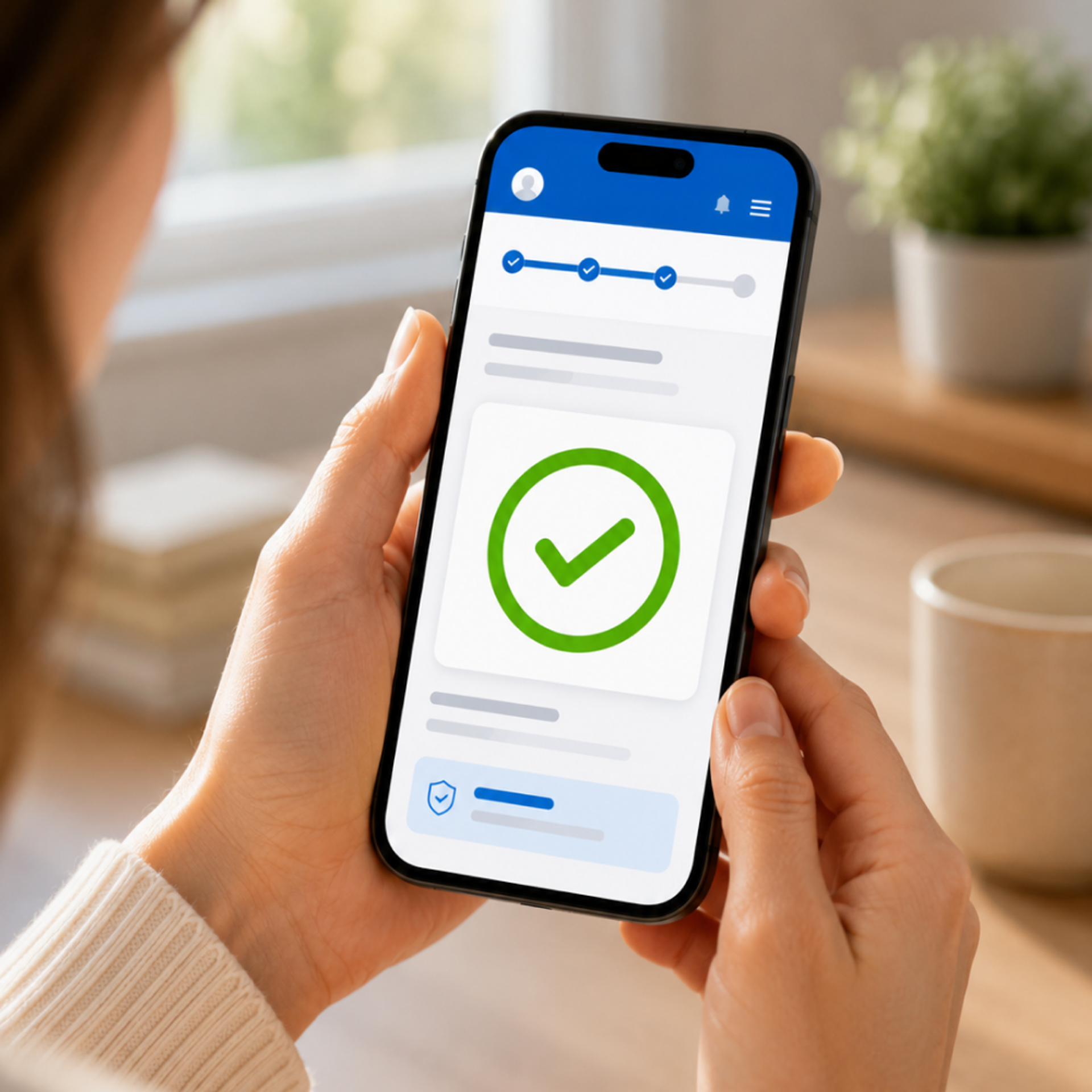
03 · Straight-Through Processing
For plausible cases, the AI automatically transfers the information to the billing system and waits for its confirmation. Customers receive immediate feedback without a service case being created.

04 · Exception Management
Only implausible values, missing permissions or assignment issues create a case. It reaches the service team in a structured and prioritised format.
03 · Example Output
This Is What an Automatically Processed Meter Reading Looks Like
A customer submits their current electricity meter reading through their energy provider’s service portal.
Client: Andrea Sommer
Customer Number: KN45678
Meter Number: 1ISK0012345
Delivery Address: Hauptstraße 137, 12345 Hauptstadt
Previous Meter Reading: 42,318kWh | Reading Date: 14 January 2025
New Meter Reading: 44,902kWh | Reading Date: 8 January 2026
Consumption: 2,584kWh
Status: plausible
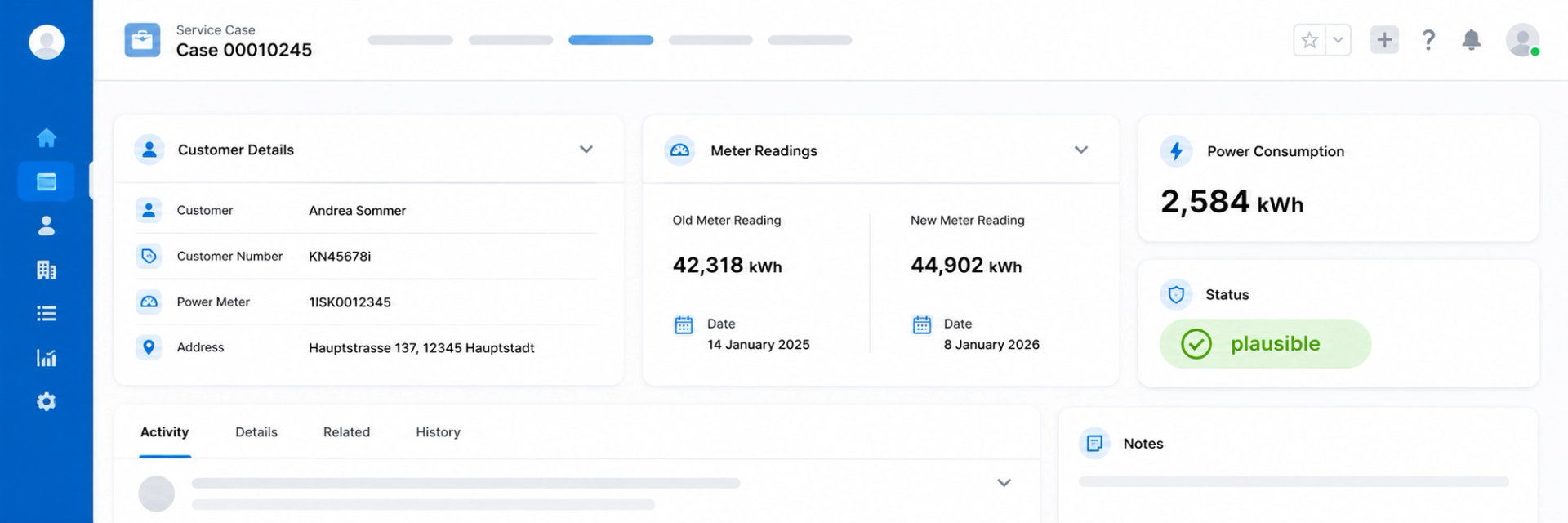
Example illustration generated from a meter reading report and CRM data.
04 · Insight
The Greatest Impact Is Achieved Not in Contact Management, but in Straight-Through Processing
With the AI agent for self-service automation, calls and emails relating to standard enquiries are eliminated. Waiting times decrease, while the service team gains time for cases that genuinely require advice. At the same time, data quality receives a significant boost. Every automatically processed case writes a validated, plausible value back to the system – in real time and without transfer errors.
Accurate meter readings and advance payments mean fewer errors in billing. Fewer errors mean fewer cases requiring clarification, fewer enquiries and fewer correction cycles. The benefits therefore extend to areas that are no longer directly connected to the original interaction.
However, this impact is only as effective as the underlying rule set. Validation rules, value ranges and exception logic determine which proportion of cases can be processed automatically and which should remain with a team member. When calibrated effectively, the rate of fully automated processing increases over time, as every exception reveals where a rule needs refining. Self-service therefore evolves from a measure that simply reduces workload into a lever that strengthens the data foundation of your customer service with every case.
Components Used


Conversational AI
Conversational AI
Optionally enhance self-service with a voice or chatbot as an additional entry channel, regardless of the product you choose.
Continue Here
Request AI Consulting Now
From use case identification to productive rollout – structured, measurable and scalable.
Additional Use Cases
Explore our use case collection to discover further ways to use AI profitably.
AI Powered by Salesfive
Everything you need to know about data foundations, AI agents and governance for the productive use of AI in your organisation.