
Process and Technology Consulting
We analyze, structure, and prioritize your core processes and develop a robust target architecture as the foundation for sustainable transformation.
Technology follows the process, not the other way around
In many companies, processes have evolved organically over time, responsibilities are not clearly defined, and system landscapes have been expanded for years. New technologies are often added in isolated instances, without ensuring end-to-end alignment across processes and systems. The result is media discontinuities, duplicate data structures, and systems that are difficult to scale.An effective transformation therefore starts with a clear baseline assessment. We analyse processes based on how they actually run in practice, visualise them using Business Process Model and Notation (BPMN), and in doing so create a robust foundation for architecture, automation, and system design.
We identify dependencies and vulnerabilities and show where processes can be made simpler, faster, or more efficient. Building on this, we assess which technologies can meaningfully support your operations. Cost-effectiveness, clear responsibilities, and a robust system architecture are at the core.Our process and technology consulting creates transparency and clear priorities. You gain a solid basis for decision-making to further develop processes in a targeted manner, structure systems appropriately, and scale your organization over the long term.

Florian Gehring
“Process optimization isn’t an efficiency project—it’s the foundation that ensures strategy, technology, and operational reality work seamlessly together.”
Why process and technology initiatives often fail
Many companies have documented processes but do not know whether they are actually followed in day-to-day operations. When process reality, systems, and the organization are not aligned, this results in media discontinuities, technical complexity, and limited scalability. We create transparency about the current state and consistently align the key factors with each other.

Unclear processes and media discontinuities

Missing Technology Target Architecture

Fragmented system architecture and high complexity

Limited scalability and efficiency
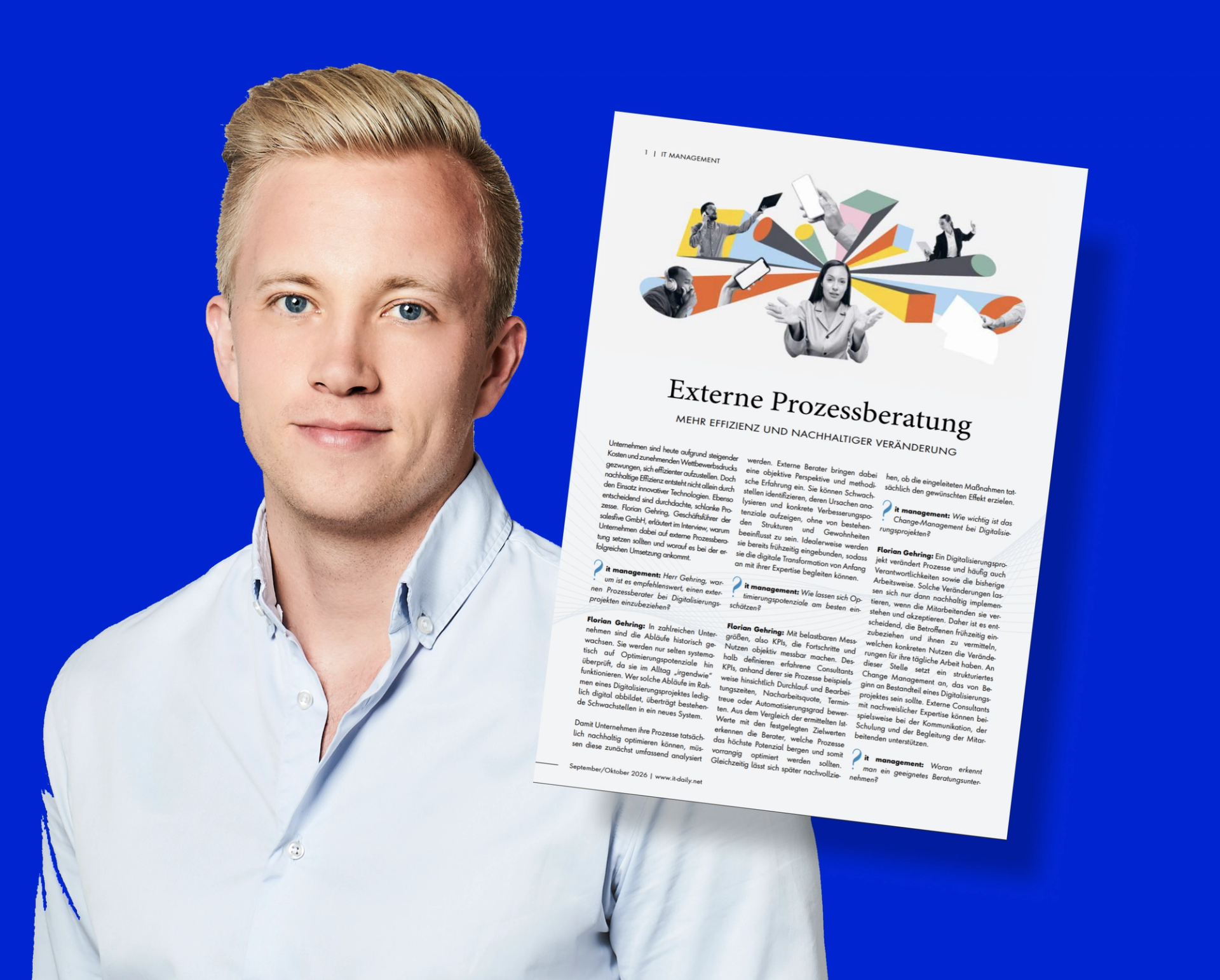
“Digitalisation should never be an end in itself.”
Those who merely replicate processes digitally simply transfer existing weaknesses into a new system. In an interview with the trade magazine it management, our managing director explains why sustainable efficiency can only be achieved through the interplay of processes, key performance indicators and change management, and how companies can recognise suitable consultancy services.

Do you want to identify optimization potential in your processes?
Let’s work together to systematically analyse your process landscape, uncover untapped potential and perfect your operations.
What makes our process and technology consulting special
We at Salesfive combine strategic process consulting with deep platform and architecture expertise—from analysis through to the roadmap.
Structured Process Modeling with BPMN
Structured Process Modeling with BPMN
We take a holistic view of processes, from initial customer contact through billing and beyond, using a visual model. This helps us avoid siloed solutions and create end-to-end workflows across departments.
Business-driven technology selection
Business-driven technology selection
Technology at our company clearly follows your defined business objectives. We evaluate solutions based on business impact, scalability, and integration capability—not on tool preferences.
Architectural Expertise
Architectural Expertise
We develop target architectures that are not only conceptually sound, but also remain realistically implementable within existing system landscapes. Existing investments are taken into account and integrated in a meaningful way.
Roadmap Focus
Roadmap Focus
We translate analysis findings into a concrete, prioritised transformation roadmap—combining quick wins with a long-term perspective. The result is clear direction, not another strategy paper.
Connecting Strategy, Process, and Technology
Connecting Strategy, Process, and Technology
Our consulting combines process expertise with a deep understanding of technology architecture. This creates consistent target visions that take both the organization and systems into account equally.
Governance and Operating Model
Governance and Operating Model
We define clear responsibilities, decision-making pathways, and governance mechanisms for your process and system landscape—with role models, KPIs, and sustainable governance.
What is Business Process Model and Notation (BPMN)?
BPMN stands for Business Process Model and Notation. It is an internationally established standard that enables business processes to be represented visually, in a structured way, and in a manner that is understandable for different roles. The goal of BPMN is to create a common language for processes so that business units, IT, and consulting can discuss workflows, responsibilities, decisions, and system interactions on the same basis.What makes BPMN special is that it also makes complex end-to-end processes transparent. Instead of describing workflows only abstractly or purely in text, BPMN translates them into an unambiguous model. It shows which steps run sequentially or in parallel, who is involved, where decisions are made, which systems are integrated, and where loops, dependencies, or interruptions arise. As a result, processes are not only documented, but can also be analyzed and compared.Especially in a consulting context, BPMN is therefore particularly valuable: processes are not only documented, but translated into a format that is sound from a business perspective, assessable strategically, and compatible with technology. This makes BPMN the foundation for systematically developing workflows, identifying optimization potential, and making processes operationalizable in the long term.
![[object Object]](https://cdn.sanity.io/images/yv9tn8xp/production/52785e568e0a672127d2051e20acf3c447265dd3-1872x626.png?w=1920&q=85&fit=max&auto=format)
Technologies as Enablers of Your Target Architecture
A clear process strategy requires the right technological foundation. We assess platforms, architectures, and automation solutions in the context of your target processes and develop a future-proof, integrated end-to-end view.



Application Areas of Structured Process and Technology Consulting
From lead-to-cash and service processes to data-driven management: these examples illustrate where structured process and technology consultancy comes into play and the practical benefits it delivers.

Lead-to-Cash Optimization
Media discontinuities between sales, quoting, and billing make end-to-end processes more difficult in many companies. An integrated process architecture creates consistent data and greater transparency across the value chain.

End-to-end digitization in service
Unclear responsibilities and siloed systems slow down service. Standardized end-to-end processes and an integrated data foundation enable faster response times and consistent service quality.

Quotation and approval processes
Manual approvals and a lack of transparency extend cycle times. Clear role models and structured workflow logic increase traceability and reduce operational friction losses.

Consolidation of System Landscapes
Historically evolved system structures make integration and reporting more difficult. A defined target architecture with a clear integration strategy reduces complexity and creates a robust data foundation.

Harmonization of Omnichannel Processes
Inconsistent communication across different channels leads to inconsistencies. Integrated process structures create a seamless customer experience and a transparent data foundation across all touchpoints.
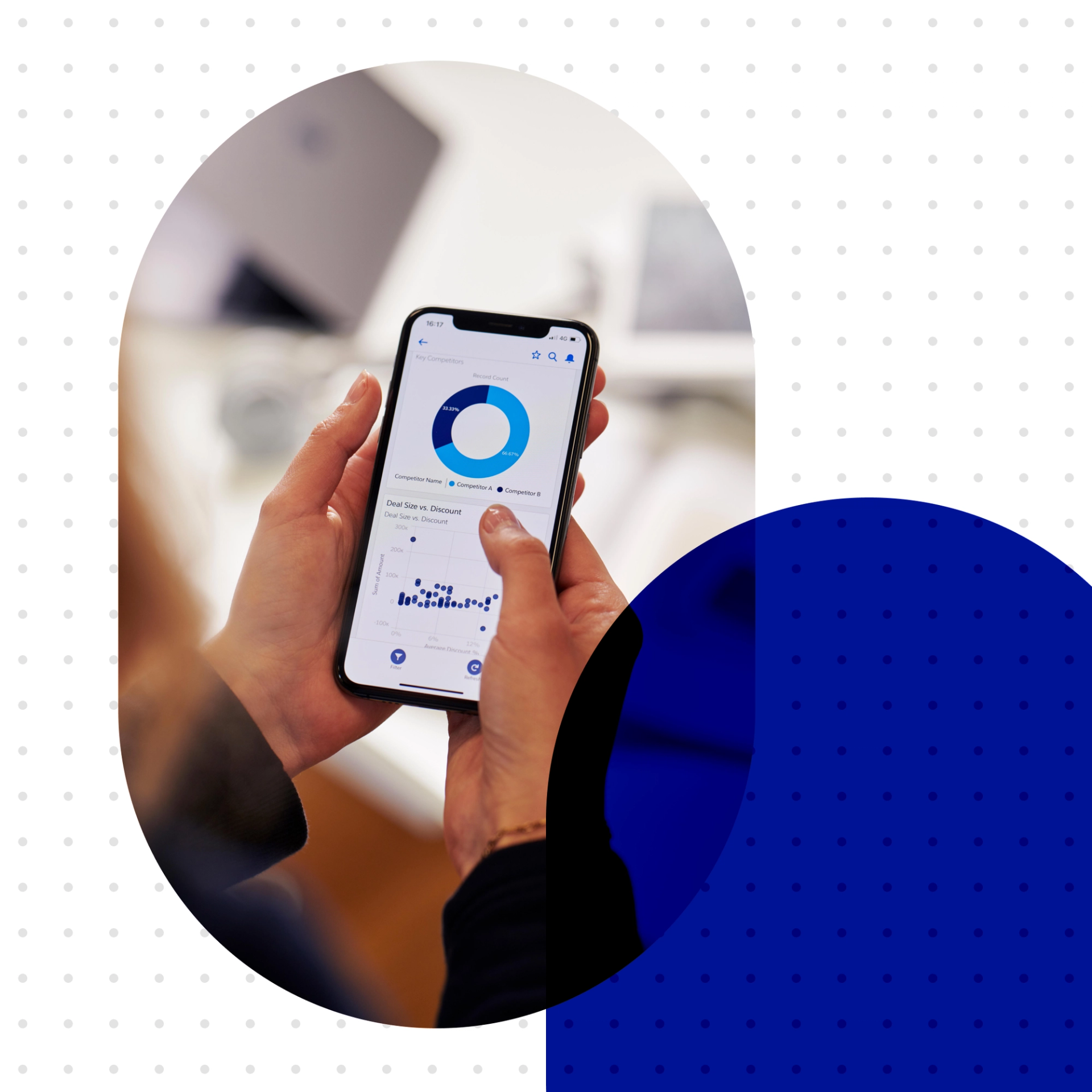
Data-driven management of KPIs
Inconsistent KPIs and manual reports prevent well-informed decision-making. Harmonized data models and clear governance structures enable transparent performance management at all levels.
Process and Technology Consulting in Practice
These customer references show how structured process consulting and well-designed target architectures reduce complexity, increase transparency, and enable sustainable scalability.











You have the questions – we have the answers.
We know that introducing new processes and technologies is complex. That’s why we support you with expert consulting and answer the most frequently asked questions about a successful implementation.
A sensible time is when growth, new business models, or increasing complexity overwhelms existing structures. Typical signs include increasing manual coordination, declining transparency over KPIs, rising error rates, or long cycle times.
Even before major technology investments are made, a structured process analysis should be carried out to ensure that systems support future target processes—and do not merely digitize existing inefficiencies.
Sustainable optimization starts with an end-to-end view of processes. Technology delivers real value only when workflows are clearly defined, responsibilities are established, and target operating models are articulated. When technology is introduced in isolation, new silos or redundant structures often emerge.
Sound consulting therefore combines process design with an appropriate target architecture and derives concrete technology requirements from it.The first step is to create transparency regarding existing systems, interfaces, and data flows. Building on this, a target architecture is defined that sets out integration principles, responsibilities, and governance rules. The objective is not necessarily to fully replace existing systems, but to achieve structured consolidation with a clear allocation of roles within the system landscape. API-based integration strategies and standardized data models play a central role in this.
Success is assessed based on clearly defined, business-relevant KPIs. These include, among others, cycle times, degree of automation, error rates, service levels, cost per transaction, and forecast accuracy. It is important to define a target state with quantifiable KPIs at the very start of the engagement. This ensures that process optimization is embedded not as an isolated project, but as a controllable transformation with measurable added value.
A structured prioritization is carried out based on business impact, strategic relevance, and feasibility. Initiatives with high efficiency potential and a manageable implementation effort are often well suited as first steps.
In parallel, a medium- to long-term roadmap is being developed that takes into account more extensive structural changes. Clear governance is crucial to ensure that initiatives do not emerge in isolation but are embedded within an overarching target picture.
Data is the foundation for transparency and effective management. Without consistent data models, defined KPIs, and clear accountabilities, contradictory reports and inefficient decision-making processes quickly arise.
A sustainable optimization approach therefore always takes into account—alongside processes and technologies—data governance, role models, and control mechanisms. Only this combination creates long-term scalability and organizational stability.